Hand-Carving, Gold Leaf and French Polish: How a Luxury Classic Furniture Manufacturer Works

A luxury classic furniture manufacturer works with the traditional crafts that defined European and Ottoman furniture for centuries: hand-carving in solid timber, gilding with real gold leaf, marquetry in contrasting veneers and French polishing by hand. These crafts are slow, and that is precisely why authentic pieces look and age differently from moulded imitations.
Classic furniture is often bought on appearance alone, yet two chairs that look alike in a photograph can be made in completely different ways. This article explains each craft, then the style families buyers ask for, and finally a practical test for telling genuine carving from cast resin.
Key takeaways
Authentic carving is cut from solid timber, not cast and applied.
Water gilding can be burnished to a mirror shine; oil gilding cannot.
Marquetry and French polish are slow hand processes that resist mass production.
Each style family has proportions and motifs that must be respected.
Weight, tool marks and repair behaviour reveal resin imitations.
The four crafts behind classic furniture
Most classic commissions combine several of these crafts in a single piece. Understanding each one helps buyers read a specification and judge a sample. It is also worth asking any classic furniture manufacturer which of them it practises in-house.
Hand-carving
Carvers work in close-grained hardwoods such as beech, walnut, lime or oak, chosen to hold fine detail. Machine routing or CNC may rough out the main volumes, a sensible use of technology, but the final detail of acanthus leaves, scrolls, shells and ribbons is cut by hand with gouges and chisels. That last stage gives carving its crisp edges, slight irregularity and depth of shadow.
Water gilding and gold leaf
In water gilding, the carved surface is built up with layers of gesso, smoothed and coated with coloured clay called bole. Gold leaf, beaten to a fraction of a micron, is laid on the wetted bole and then burnished with an agate stone to a mirror shine in chosen areas, leaving others matt for contrast. Oil gilding, laid on an adhesive size, is more robust but cannot be burnished to the same brilliance. Both use real leaf, often called varak in Türkiye, which is very different from gold paint.
Marquetry
Marquetry assembles pictures and patterns from veneers of different colours and species, sometimes with brass, mother-of-pearl or bone. The pieces are cut, fitted into a sheet and laid onto the carcass. Precise cutting today often uses laser or fine saws, but selection of veneers for colour and figure remains an eye-and-hand decision.
French polishing
French polish is shellac applied by hand with a cloth pad in many thin layers, building depth and a warm glow that sprayed lacquers struggle to imitate. It is less resistant to heat and water than modern lacquers, so it suits display pieces and private rooms more than restaurant tables. Many manufacturers offer a hand-rubbed look on a more durable lacquer for heavy-use pieces.
Style families and what defines them
Clients usually describe a style by name. A good manufacturer knows the proportions and details each name implies:
Louis XV: curves everywhere, cabriole legs, asymmetrical rocaille carving, shells and flowers
Louis XVI: a return to straight lines, fluted tapering legs, ribbons, laurel and restrained symmetry
Empire: monumental and architectural, dark mahogany, gilt-bronze mounts, classical motifs such as laurel wreaths and lion paws
Art Deco: geometric forms, exotic veneers, lacquer, shagreen and polished metal, bold sunburst and stepped motifs
Ottoman: rich inlay in mother-of-pearl and bone, geometric and floral patterns, low seating and carved screens
Mixing styles
Contemporary classic interiors often combine a dominant style with neutral modern pieces. The risk is mixing details from several periods on one piece, which reads as confused. Keep each piece true to a single language.
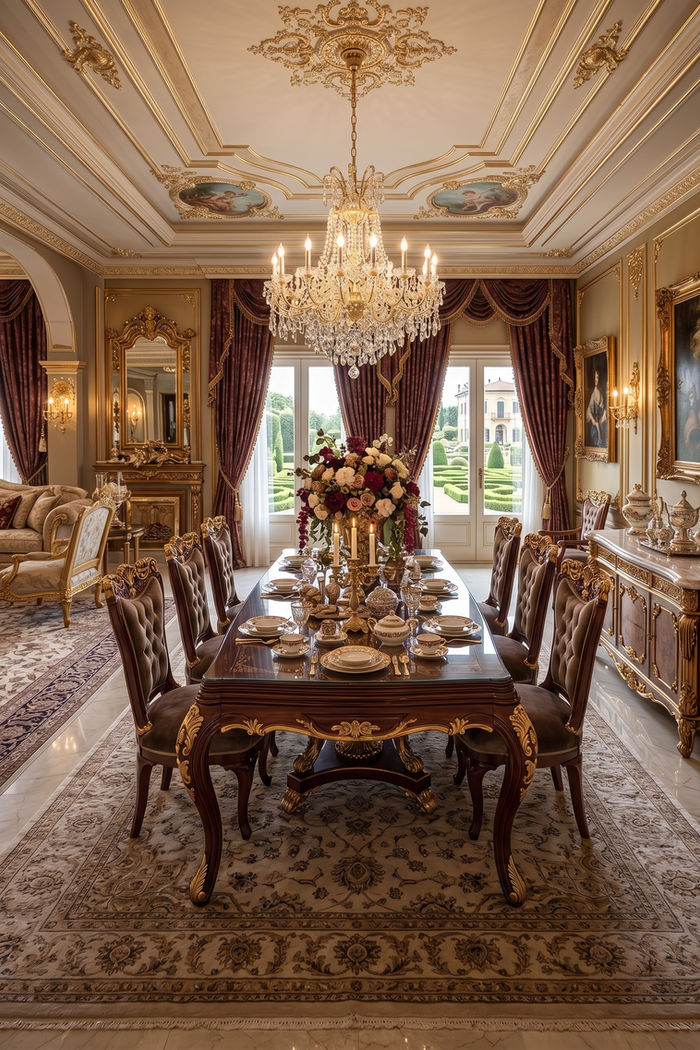
Authentic carving versus cast resin: a practical test
Much furniture sold as classic is actually a plain frame with resin or composite ornaments glued on and painted gold. It can look convincing in photographs. Use these checks on a sample:
Weight: solid carved timber is noticeably heavier than resin ornament on a light frame
Tool marks: hand carving shows small facets from the gouge; casting shows smooth, rounded, identical details
Repetition: on a pair of chairs, hand carving differs slightly; cast ornaments are identical
Joints: look for a seam line where an applied ornament meets the frame
Gilding: real leaf shows fine overlaps between sheets; paint shows brush marks or uniform spray
Repair: timber can be re-carved and re-gilded; chipped resin usually has to be replaced
Where classic furniture is specified today
Classic pieces are commissioned for private residences and villas, heritage hotels, formal reception rooms, fine-dining restaurants and representative offices. In hospitality, the craft must coexist with contract requirements: fire-safety-compliant fabrics and foams, durable finishes on high-touch surfaces and frames strong enough for public use. A manufacturer combining traditional workshops with contract experience can deliver both.
Sagist Group, founded in Istanbul in 1996, combines hand-carving, gold-leaf gilding, marquetry and French polishing with modern CNC preparation in its own factories. Examples of the work are on the classic furniture collection page.
Caring for carved and gilded pieces
Classic furniture lasts for generations with simple care:
Dust gilding with a soft, dry brush; never use water or cleaning sprays
Keep French-polished surfaces away from hot dishes and standing water
Avoid direct sunlight and strong humidity swings near radiators or air-conditioning outlets
Have chips in carving or gilding repaired by a specialist rather than touched up with paint
Frequently asked questions
How can I tell if classic furniture is hand-carved or resin?
Check weight, tool marks and repetition. Hand-carved timber is heavier and shows small faceted gouge marks, and carving on matching pieces varies slightly. Resin ornaments are lighter, smooth, identical from piece to piece and often show a seam where they are glued to the frame. Chipped resin cannot be re-carved, while timber can be repaired.
What is the difference between water gilding and oil gilding?
Both apply real gold leaf. Water gilding lays leaf onto layers of gesso and clay bole that are moistened, and can be burnished with an agate stone to a mirror finish. Oil gilding uses an adhesive size, is more durable in handled areas but stays matt. Many pieces combine both for contrast.
Is French polish practical for everyday furniture?
French polish gives a deep, warm shine but is sensitive to heat, water and alcohol. It suits display cabinets, occasional tables and private rooms. For dining tables, desks or hotel furniture, a durable lacquer with a hand-rubbed appearance is usually more practical. Discuss use and maintenance with the manufacturer before choosing.
What are the main classic furniture styles?
Common style families include Louis XV with curved forms and rocaille carving, Louis XVI with straight fluted lines, Empire with monumental forms and gilt-bronze mounts, Art Deco with geometric shapes and exotic veneers, and Ottoman with mother-of-pearl inlay and geometric patterns. Each has its own proportions and motifs.
Can classic furniture be used in hotels and restaurants?
Yes, if it is built for contract use. Frames must withstand public use, upholstery fabrics and foams must meet the fire-safety standard of the project location, and high-touch surfaces need durable finishes. Carving and gilding can be concentrated on display pieces and areas less exposed to wear.
Commission authentic classic furniture
Explore hand-carved, gilded and marquetry pieces on the Sagist Group luxury classic furniture page, then send your style references, room plans or a photograph of a piece you admire through the contact page. You can also discuss a commission on WhatsApp.


Comments