Sagist Group Chairman, Architect, and PhysicsEngineer Metin Durmaz: "We are carryingTurkey's design and production accumulationto international investments."
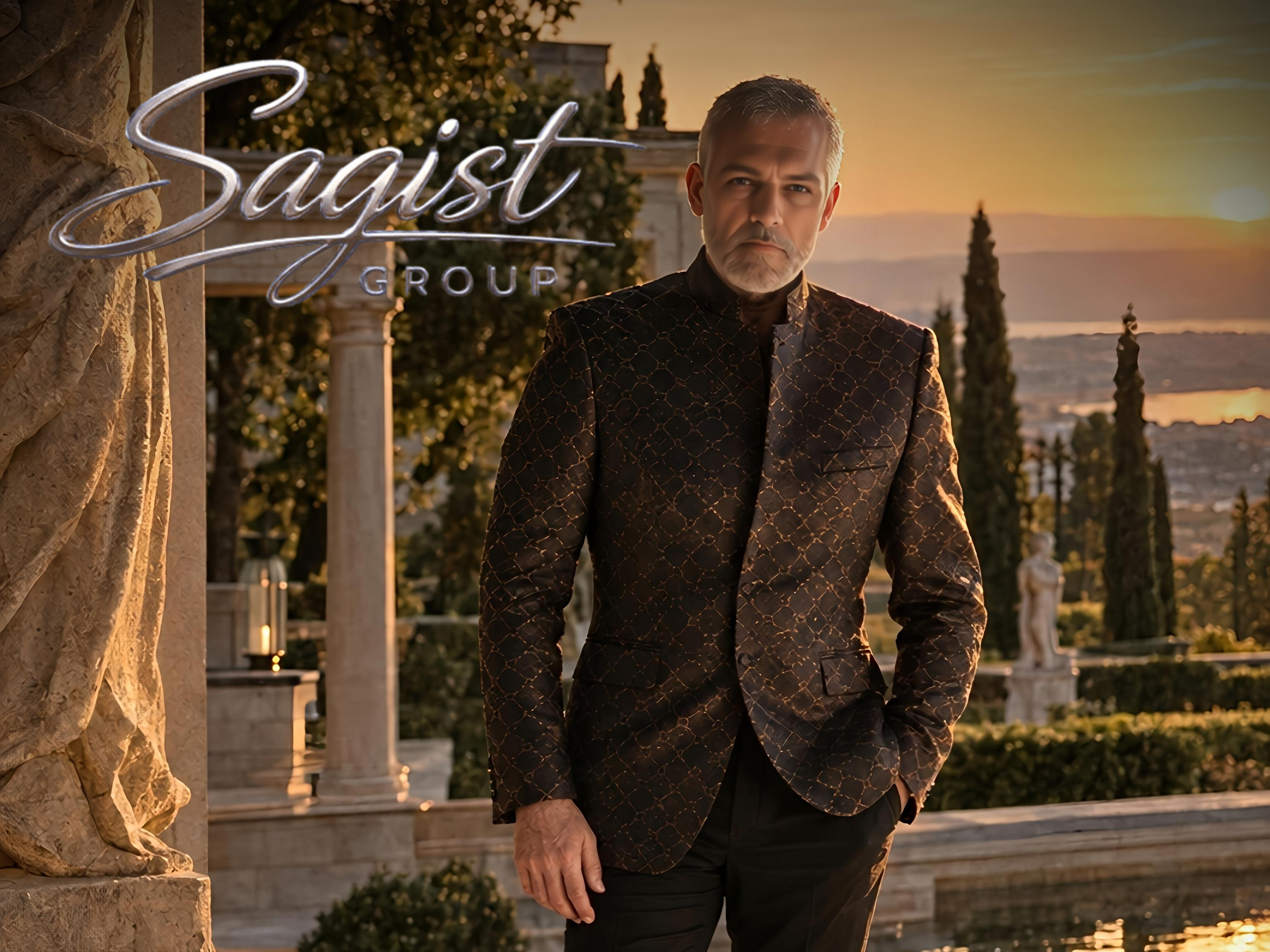
Sagist Group Chairman, Architect, and Physics Engineer Metin Durmaz: "We are carrying Turkey's design and production accumulation to international investments."
Istanbul-based luxury furniture manufacturer and turnkey project firm Sagist Group is expanding its architecture, construction, and custom production experience through its own investments in Bulgaria. The Chairman of the company, which dedicates 100 percent of its furniture production to exports, architect and physics engineer Metin Durmaz states that they finance their industrial campus, villa, and hotel projects in Botevgrad entirely with their own equity; and they carry out the design, construction, furniture production, and interior decoration processes in-house. We spoke with Durmaz about his international experience, enduring quality in architecture, and his projects that Bulgarian investors are showing partnership interest in.
How did your identity as an architect and physics engineer shape your international career and your approach to projects?
My international journey began during my student years. I studied at a university in China with a TÜBİTAK scholarship; I received an education in architecture and physics engineering. Afterwards, I continued my master's education at the Royal Academy of Art in the UK. Living in different countries allowed me to see how the relationship people establish with space changes according to culture, climate, and living habits. As an architect and physics engineer, I evaluate a building both as a space where humans will live and as a system operating under physical conditions. Light, heat, acoustics, material behavior, and energy use are direct parts of the design. I consider the technical equivalent of an aesthetic decision and the impact of a technical solution on the user together. When I returned to Turkey, tourism investments were developing. We saw a significant need in custom furniture design and production for hotels. Our work, which started with hotel furniture production, extended over time to interior design, architectural application, construction, and turnkey project management. Today, we utilize this accumulation while developing our own investments as well.
What thoughts and experiences nourished your understanding of architecture?
For me, at the foundation of architecture lies the ability to understand a building in all its aspects. A consistent relationship needs to be established between the user's needs, the environment where the building is located, the materials, and technical solutions. Mimar Sinan is a reference I constantly look back to in this regard. In his structures, the load-bearing system, light, acoustics, and human scale complement one another. Every decision has a correspondence within the entirety of the building. The six-year period of working and learning I spent with Zaha Hadid also stands among the most important experiences that nourished my professional perspective. Over time, what developed my own approach the most was manufacturing and construction site experience. The stages a line goes through as it turns into material, and an idea into a structure, teach a person a lot. Thinking about how the space you design will be used years later matures your perspective on architecture.
How do you establish the relationship between architecture, interior architecture, and furniture design?
Each of these fields requires expertise. What I care about is that the areas of expertise feed each other throughout the project. If the interior space, and subsequently the furniture, are shaped by independent decisions after the architectural design is completed, it can cause the initial thought to weaken. This is exactly what makes us strong, having all of them within one company. For example, in a hotel room, bed placement, lighting, electrical infrastructure, storage areas, and circulation must be resolved together. The dimension of the custom-made furniture must be compatible with the architecture of the room and the user's needs. These decisions simultaneously affect the cleaning, maintenance, and operational layout. For this reason, we have the design and production teams work together at Sagist Group. Evaluating at an early stage how the decision taken in the drawing will find a corresponding reality in the factory and on the construction site strengthens the application quality. I also consider it important to give more place to production knowledge and interdisciplinary work in architecture and interior architecture education.
What makes a luxury interior space valuable to you?
Explaining luxury through the price of the material remains insufficient. Correct proportion, natural material, good craftsmanship, comfort, privacy, and ease of use are more decisive for me. The seating ergonomics are as important as the upholstery of an armchair, and the internal layout and mechanism are as important as the surface of a cabinet. In a luxury villa design as well as in the interior space of a five-star hotel, the user feels the quality in these details within daily life. The material must be chosen according to its location. The needs of a heavily used hotel lobby and the needs of a private residence are not the same. Enduring quality emerges when you correctly bring together aesthetic expectations with usage conditions. We are interested in how the space we designed will age over the years as much as its appearance on the opening day. In this context, I cannot help but mention that we have a magnificent team; I separately thank them for their perseverance and hard work.
What lies at the foundation of establishing lasting business relationships in international projects?
Acquaintance and lobbying can provide the first meeting; the work you do determines the continuation of the relationship. It is necessary to correctly understand the scope, create a realistic calendar, and take responsibility when a problem arises. As Sagist Group, we conduct our furniture production 100% export-oriented, and we prepare the products we manufacture in Turkey for our customers and projects abroad. This working format makes the quality expectations, usage habits, and delivery conditions of different countries a part of production planning. Hotel investors, real estate developers, architects, and purchasing teams can take part in the same project with different priorities. It is important to establish a common understanding between design expectation, budget, and delivery time. The continuity of this communication is decisive both in project-specific furniture production and in international application works. We have signed off on many projects where we personally did the construction as well. The jobs we completed and the references born from these jobs had a large share in our expansion to different countries. The trust gained in one project often becomes the beginning of the next project.
What experiences did your works in Africa give you?
I learned that Africa should not be treated like a single market. The business culture, logistical conditions, and decision-making processes of every country are different. In the countries we work in, primarily Nigeria, we attached importance to establishing direct communication with the employer and closely following the application. In international construction, furniture, and decoration projects, the products reaching the site, planning the assembly, and managing the delivery process are as important as correct production. That is why we became the prioritized and first-choice company for everyone from Heads of State to important businessmen in almost all African countries. We also had difficult experiences; even though they came with the law of brotherhood, they still have not paid our money in Benghazi, Libya. These showed us that personal trust must be supported by a clear contract, defined job scope, and a regular payment plan. While trying to understand a country, you must also preserve your own business discipline.
Which areas specifically interest you in the projects in America and Europe?
I care about bringing existing structures to a new function. We worked on transforming an old church into a hotel in Atlanta. The hotel transformation in Portugal is also among the projects we attach importance to in this regard. In such works, you cannot develop the hotel design over a ready-made template. First, you must understand the character of the existing building, the features that need to be preserved, and the needs of the new use. While providing accommodation comfort, you must also keep the memory of the building alive. In our rehabilitation center work in Switzerland, trust, privacy, and daily life quality stand out. Structures with different functions allow us to think about the effect of architecture on humans with its different aspects. But in the meantime, we are also building many luxury and ultra-luxury villas and mansions in the USA and Europe.
What kind of approach do you adopt in the restoration and reuse of historical buildings?
The first step is to understand the building and its surrounding environment. You cannot make a healthy design decision without knowing the existing material, the load-bearing system, and past interventions. Communication with local experts and relevant institutions is very important here. The technical requirements of the new use need to be evaluated together with the conservation approach. In projects like hotel transformations, a delicate balance is established between contemporary comfort expectations and historical identity. Sometimes the most correct decision is to intervene less. I think the new design should make the value of the existing structure visible.
How does being a manufacturer provide an advantage for you in turnkey hotel and villa projects?
Being a manufacturer allows us to evaluate design decisions early on in terms of material, craftsmanship, and applicability. We can address how custom-made furniture, fixed woodwork, upholstery, and other interior space components will combine with each other right at the drawing stage. In international hotel projects, the furniture, fixture, and equipment scope referred to as FF&E requires a large number of products to be prepared with a common design understanding. Visual and technical consistency must be ensured from the guest room to the lobby, from the restaurant to the common areas. In a turnkey application, packaging, international logistics, site assembly, and delivery coordination carry importance as much as production. Planning these stages together ensures that the responsibility is clear from the employer's perspective. When a problem arises, knowing by whom and how the solution will be produced directly affects the progress of the project.
In how many countries do you currently have active projects? Where do your Bulgaria investments stand in these works?
Currently, our active projects are continuing in 11 countries. Bulgaria carries a separate importance for us as we take part there with our investor identity as well. We cover the financing of our projects in Botevgrad completely with Sagist Group's own equity. We undertake the investment, project development, and construction ourselves. We also carry out the architectural design, furniture production, interior decoration, and application processes within our own organization. Therefore, we take our decisions by thinking beyond the date the construction will be completed. How the building will be used, how its maintenance will be done, and how it will produce value over time is important to us.
Why Bulgaria and especially Botevgrad?
Its proximity to Turkey and its connection with European markets make Bulgaria an important investment area for us. While evaluating Botevgrad, we looked at production, transportation, logistics, and living needs together. It is also necessary to consider the relationship of an industrial investment with the residential, accommodation, and service opportunities around it. We aim to create a long-term presence in the region. We carry the architecture, construction, and furniture production experience we developed in Turkey to our investments in Bulgaria with this understanding. The relationships we establish with local business circles are also important in this process. We evaluate the interest Bulgarian investors show in our projects as an indicator of the trust placed both in the potential of the region and in our ability to develop and bring the work to life.
To what do you attribute the desire of Bulgarian investors to establish a partnership and invest with you?
We see a strong interest from Bulgarian investors towards establishing a partnership and investing together with us. In our meetings, the trust they have in our ability to construct, produce, and manage the process to the end stands out as much as our ability to design the project. Investors see that we directly allocate resources to the project we develop and that we take its responsibility. Carrying out architecture, engineering, construction, and production within the same organization presents a concrete framework regarding how the project will be brought to life. We find the partnership desire of local investors valuable in terms of positive and jointly developable works. For us, at the foundation of a partnership, alongside mutual trust, long-term goals and work understanding also need to overlap.
What kind of need will your industrial campus consisting of fifteen factories answer?
We are developing an industrial campus planned together with its infrastructure that manufacturers can use. We are making the investment of this fifteen-factory project with our own equity and carrying out its construction within our own organization. It is a large complex area where storage services will also be available. For the factory building to work efficiently, the energy infrastructure, transportation, loading areas, and movement within the facility need to be thought of together. Our goal is to offer turnkey factory structures to manufacturers. We also desire Turkish industrialists planning production or operations in Europe to take part here. We want to make it easier for the manufacturer to focus on their own field of activity by reducing the time they would allocate to facility installation and the coordination burden. We also find it valuable to contribute to the formation of new business relationships between manufacturers in Turkey and the European market.
What kind of living and accommodation understanding are you developing in your villa and hotel project?
Approximately two kilometers away from our industrial campus, we have a separate investment consisting of fourteen luxury villas and a five-star hotel. We carry out its design, construction, furniture production, and interior space applications within our own organization. Full and Luxury turnkey. In the villas, we care about privacy, comfort, and daily usage quality. Developing the architectural plan and interior decoration with the same understanding ensures that living areas are more consistent. We plan to operate the hotel within our own organization. That is why we transferred the CEO of a very large international hotel chain to our company and handed over all our hotels located in many countries to professionals. Thus, while making the hotel architecture and furniture selections, we evaluate maintenance, durability, and business needs alongside the guest experience. We are also shaping the scope of the beauty and well-being center we plan to develop within the hotel together with relevant experts.
How does being both the investor and the firm carrying out the construction affect your project management?
You need to see the results of a decision on design, production, construction, and operation at the same time. A choice that seems economical at the beginning can lead to a high maintenance cost in the future. A longer-lasting solution may require a different budget in the initial investment stage. Investing requires being more careful in resource utilization and planning. You cannot evaluate the calendar, cost, and quality goals independently from each other. The model we execute within our own organization provides direct control over the process. In return for this, we also undertake all of the responsibility. In our Bulgaria projects, the close relationship between the investor, architectural team, manufacturer, and practitioner helps us preserve the integrity of our decisions.
What is the size of your investments in Bulgaria and your five-year profitability target?
In our current planning, our villa and hotel investment is approximately 13 million euros, and our industrial campus consisting of fifteen factories is approximately 49 million euros in size. The total investment budget of the two projects reaches approximately 62 million euros. From these investments in Bulgaria, we foresee obtaining a total profit of 25-27 million euros based on real minimum figures in a five-year period. This expectation is a profitability projection based on planned sales, operating revenues, and cost calculations. The results that will materialize will take shape depending on the projects' calendar and market conditions. Our long-term goal is to develop projects that are used and operated, providing an economic contribution to the region they are located in. I believe that the success of the investment should be evaluated together with the performance of the emerging structures over the years.
What does representing Turkey in international projects mean to you? How do you evaluate the reflection of Turkey's foreign relations on the business world?
I think representing Turkey has a concrete correspondence in our daily way of working. Keeping the promise we give, producing correctly, respecting the calendar, and standing behind the work we deliver is a part of this responsibility. As a Turkish architect, physics engineer, and businessperson, I strive to represent our country in the best way possible with the works we do. It is important to correctly explain Turkey's deep-rooted history, production culture, and entrepreneurship accumulation in the international arena. I find our President Mr. Recep Tayyip Erdoğan's approach, which makes this historical accumulation visible in international relations, valuable. I think his vision aimed at developing foreign relations contributes to Turkish businesspeople establishing connections in different geographies and evaluating new business opportunities. During our works in Nigeria, I closely saw the importance the developing dialogue between countries carries from the perspective of Presidents and business circles. Transforming the possibilities these relationships open into permanent trust is the responsibility of us businesspeople. We must reveal the accumulation Turkey possesses in furniture production, architecture, engineering, and construction applications with the quality of the work we do. For an employer or an investor to look at a project we completed and want to work with a team from Turkey again is very precious to me. I believe that permanent reputation is born from works done with the same responsibility over the years. Despite all difficulties, I have full faith that the New Turkey Vision initiated under the leadership of our President Erdoğan can overcome all horizons and obstacles!
Turnkey luxury hotel FF&E solutions
Bespoke hospitality furniture manufacturing
5-star hotel interior fit-out contractors
Global hospitality FF&E procurement
Custom hotel joinery and millwork
Turnkey hotel conversion architecture
Ultra-luxury turnkey villa interiors
Bespoke residential interior architecture
High-end custom home furniture manufacturing
Single-source luxury furniture production
In-house custom furniture manufacturing
Export-focused luxury furniture factory
B2B luxury furniture procurement
Turnkey industrial campus development
European luxury hotel investments
International turnkey construction management
Botevgrad Bulgaria industrial investments
Architectural physics in interior design
Ergonomic luxury space planning
Historical building hotel restoration
Interdisciplinary architectural manufacturing
Luxury FF&E project management
Turnkey hospitality execution firm
Bespoke FF&E manufacturing Turkey
High-net-worth residential interior design
Commercial interior fit-out specialists
Custom luxury upholstery and casework
Global luxury hospitality suppliers
End-to-end luxury architectural solutions
Sagist Group Metin Durmaz architecture
#SagistGroup #MetinDurmaz #HotelFurniture #LuxuryFurniture #TurnkeyProjects #InteriorArchitecture #FFE #HospitalityDesign #BespokeFurniture #TurnkeySolutions #Architecture #CustomFurniture #GlobalExport #Euronews #Botevgrad #HotelMobilya #TurkishManufacturing #ContractFurniture #LuxuryDesign #TurnkeyHotel #ProjectManagement #Investment #FurnitureManufacturing #InteriorFitOut #HospitalityFFE Euronews Metin Durmaz Interview
Comments