Luxury Villa Budget: Where a $3 Million Villa Project Loses Money, and How Turnkey Stops It


A luxury villa budget usually leaks in the gaps between contracts, not inside any single one. In a new 21-minute conversation on the Sagist Group YouTube channel, CEO Metin Durmaz, architect and physics engineer, walks through a USD 3 million villa project and shows where owners lose money: three firms with three budgets, price changes during the build, unplanned material choices, and logistics nobody owns.
This article sets out his main points and adds a practical checklist for owners and developers planning a villa. It also explains what a turnkey contract covers and what it does not, so you can judge whether it fits your project. Our villa furniture division works on exactly this scope, from drawings to installation.
Key takeaways
Sagist Group published this video on its YouTube channel in November 2026.
Splitting a villa between a construction firm, a design firm and a furniture supplier creates three budgets, and furniture and finishes are often squeezed at the end.
A single turnkey agreement fixes one scope, one price and one programme for the interior.
Material strategy matters: solid marble or veneer, and where each is used, changes the cost far more than the furniture style.
Export packing, customs and delivery to site should be inside the contract, not left to the owner.
What the video shows
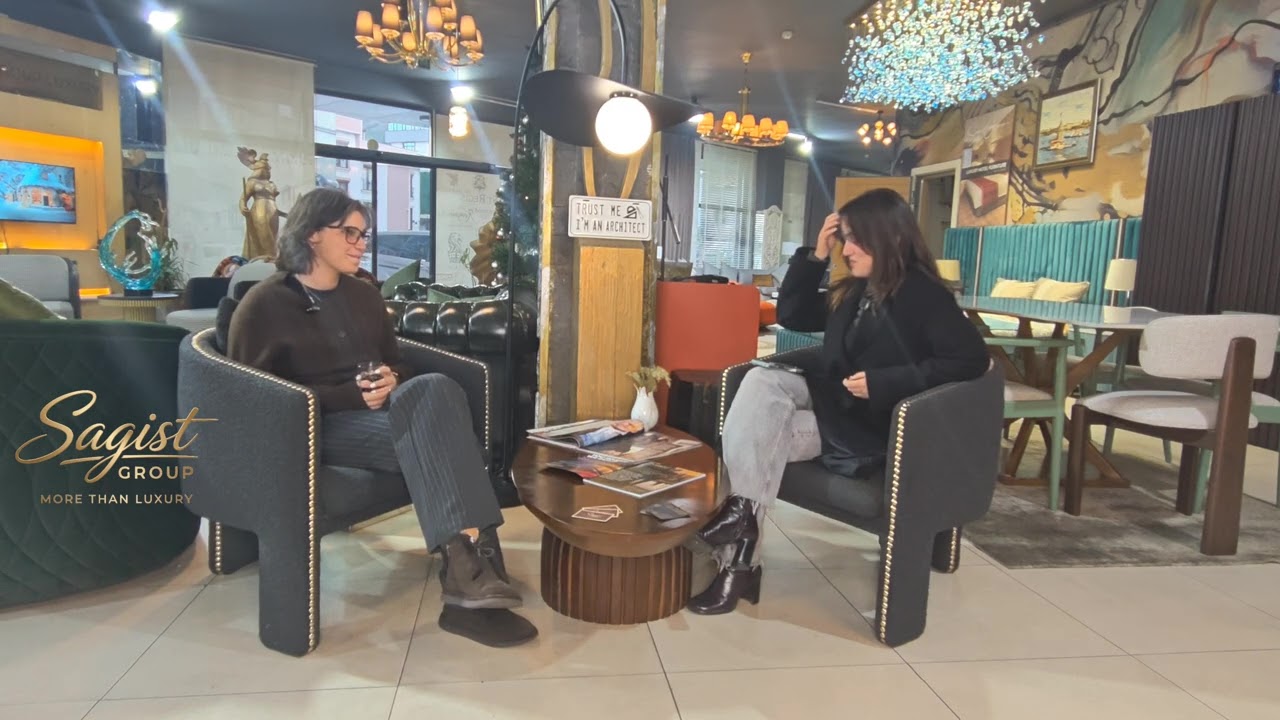
The video is a seated conversation filmed in a Sagist Group showroom, with Metin Durmaz answering questions about a hypothetical USD 3 million villa. The on-screen title asks: where are you losing your money?
He covers the split between construction, interior design and furniture contracts, price stability against exchange-rate swings and inflation, single-source design and production in one factory, the use of marble, wood veneer, upholstery and metalwork, export packing and customs, and how a project starts with drawings, a client questionnaire and a final render. English subtitles run throughout the video.
Why do luxury villa budgets run out before the interior is finished?
Because each contractor protects its own budget, and the last trades on site inherit whatever is left. In the video, Metin Durmaz describes the common pattern: the construction company takes the largest share, the design firm works to its own fee, and by the time furniture, decoration and finishing work begin, the owner has little room left.
The fix is to set the interior budget at the same time as the structure, with one party responsible for both. The Design-Build Institute of America describes the core benefit of single-contract delivery simply: the owner manages one contract with a single point of responsibility. Its Design-Build Data Sourcebook also cites CII/Pankow research reporting lower cost growth and schedule growth for design-build than for traditional design-bid-build.
Agree the furniture, fixtures and equipment (FF&E) budget before construction starts, not after.
Ask every bidder to price the same written scope, room by room.
Keep one party responsible for interfaces: walls, ceilings, lighting, joinery and loose furniture.

How do exchange rates and inflation hit a villa project?
They turn a signed number into a moving target. When materials, furniture and labour are bought from several suppliers in different currencies over many months, price differences, exchange-rate swings and inflation add up. In the video, Metin Durmaz explains that under a turnkey agreement Sagist Group states its price and keeps it, because design, production and delivery sit in one plan.
For owners, the practical point is to check what is fixed and what is not. Ask whether the price is fixed in one currency, which items are excluded, and how changes requested by the client are priced.

Marble, veneer and upholstery: where the budget is really decided
Material choices change the cost of a villa interior more than furniture style does. Metin Durmaz explains that marble used for floors and walls and marble used in furniture are priced and handled differently. Solid marble in block form may suit one statement piece, such as a dining table, while veneer and engineered panels can carry the same look across larger surfaces on a limited budget.
Wood veneer, custom upholstery and metalwork follow the same logic: decide where the real material is visible and touched, and where a lighter construction gives the same appearance. Producing these elements in one factory, as Sagist Group does with in-house joinery, upholstery, metalwork, stone and lacquer, keeps tones and finishes consistent from room to room.
Use solid stone or wood where it is touched and seen up close.
Use veneer or engineered panels for large wall and cabinet areas.
Approve physical samples of every finish before production.
Who handles customs, shipping and installation?
On a turnkey project, the supplier does. Metin Durmaz describes a common problem: buyers collect goods from a factory, then face customs costs at home and the cost of moving everything from the port to the site, and finally ask how it will be installed. In a turnkey contract, packing for the destination country, export documents, freight and installation are part of the scope.
Sagist Group has exported to 73 countries and installs with its own crews. For a villa, the speaker gives a delivery window of roughly four to eight months depending on size and customisation; Sagist Group's general guidance for turnkey interiors is typically 20 to 30 weeks, agreed per project and never guaranteed.

How does a turnkey villa project start?
It starts with information, not with furniture. Owners send drawings, DWG or CAD files and photos through the website, email or WhatsApp. Sagist Group then uses a detailed questionnaire about the household, such as who lives in the house and any accessibility needs, to understand how the villa will be used.
From there, the team prepares style options, the client mixes and matches, and one final render is approved. After the client selects a budget level, everything to be delivered is written down: furniture, lighting and finishes are listed, so the client knows exactly what the budget buys.
Frequently asked questions
Where does money get lost on a luxury villa project?
Mostly between contracts. When construction, interior design and furniture are bought separately, each firm works to its own budget, scope gaps appear at the interfaces, and furniture and finishes are often squeezed at the end. Price changes over a long programme and logistics left to the owner add further cost.
What does a turnkey villa interior contract usually include?
A turnkey interior contract usually covers design development, shop drawings, samples, manufacturing of furniture and fitted joinery, packing, export documents, freight, delivery to site and installation, under one agreed scope and price. Exactly what is included should be listed room by room in the contract.
How long does a turnkey luxury villa interior take?
It depends on the size of the villa and how much is custom-made. In the video, Metin Durmaz mentions roughly four to eight months. Sagist Group's general guidance for turnkey interiors is typically 20 to 30 weeks from signed contract and approved samples, agreed per project.
Is solid marble or veneer better for villa furniture?
Both have a place. Solid marble suits a few statement pieces that are touched and seen up close, such as a dining table. Veneer and engineered panels give a similar look on large surfaces at lower weight and cost. A good material plan decides this room by room before production.
Where can I watch the full video?
You can watch the full conversation with Metin Durmaz on the Sagist Group YouTube channel: https://youtu.be/XLmVV1DaI8Q. It has English subtitles and chapters for each topic.
Plan your villa interior with one budget
Send your drawings or a short brief and we will prepare a written, room-by-room scope. See our luxury villa furniture work and catalogues, or contact Sagist Group to discuss your project.
Watch the full video on YouTube (@sagistgroup) and subscribe to the Sagist Group channel.
#sagistgroup #luxuryvilla #turnkeyproject #villadesign #ffe #metindurmaz #interiordesign #bespokefurniture
Written by: Elif Naz Sürücü (Architect & Space Designer) · Reviewed by: Metin Durmaz (Architect & CEO)


Comments